
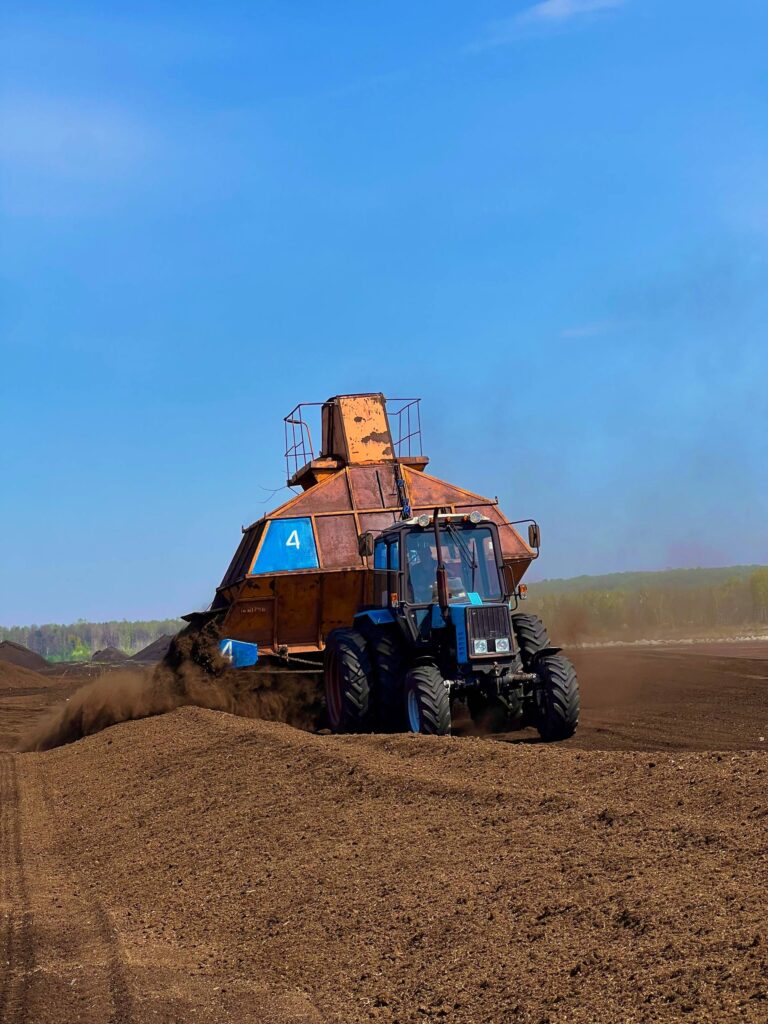
Agricultural Peat: Benefits, Uses and Advantages for Farmers
In modern agriculture, natural materials that improve soil fertility and ensure stable crop yields without excessive chemical input are becoming increasingly important. One such resource is lowland agricultural peat, widely used in greenhouses, open fields, and nurseries.
What Is Lowland Agricultural Peat?
Lowland peat is formed in water-saturated environments with continuous groundwater supply and is rich in minerals. Unlike high-moor peat, it has a neutral or slightly acidic pH level, making it suitable for most agricultural crops.
This type of peat has a well-structured composition and contains humic acids and organic compounds beneficial for plant growth.
Use of Peat in Greenhouses
In greenhouse production, lowland peat is widely used as a component of soil mixtures. It:
- improves air and water permeability of the substrate
- creates optimal conditions for root development
- reduces the risk of overwatering
Due to its moisture retention capacity, peat helps reduce irrigation frequency and maintain a stable microclimate for plants.
Application in Open Fields
In open-field agriculture, peat is used to improve the structure of heavy clay or depleted soils. Its application:
- increases organic matter content
- stimulates soil microflora activity
- improves soil moisture balance
As a result, the soil becomes looser, retains nutrients and moisture more effectively, and supports better crop development.
Peat in Nurseries
In nurseries, peat is one of the key materials for growing seedlings and young plants. It provides a light substrate structure essential for healthy root system formation and promotes uniform plant growth.
Peat also works well in combination with mineral and organic fertilizers, increasing their effectiveness.
How Peat Improves Soil
Agricultural peat has high moisture retention capacity, allowing soil to maintain adequate hydration even during dry periods. Its organic compounds:
- help form a stable soil structure
- improve aeration
- reduce soil compaction
Humic substances stimulate root growth and improve nutrient uptake by plants.
Advantages for Farmers
For farmers, the use of lowland peat provides:
- increased crop yields
- improved soil quality without aggressive chemicals
- reduced irrigation costs due to moisture retention
- stable results in greenhouse and nursery production
Conclusion
Lowland agricultural peat is an efficient and versatile material for modern farming. Its use in greenhouses, fields, and nurseries helps improve soil structure, optimize water balance, and increase productivity.
In 2025, peat remains an important tool for farmers seeking to combine high productivity with sustainable soil management.